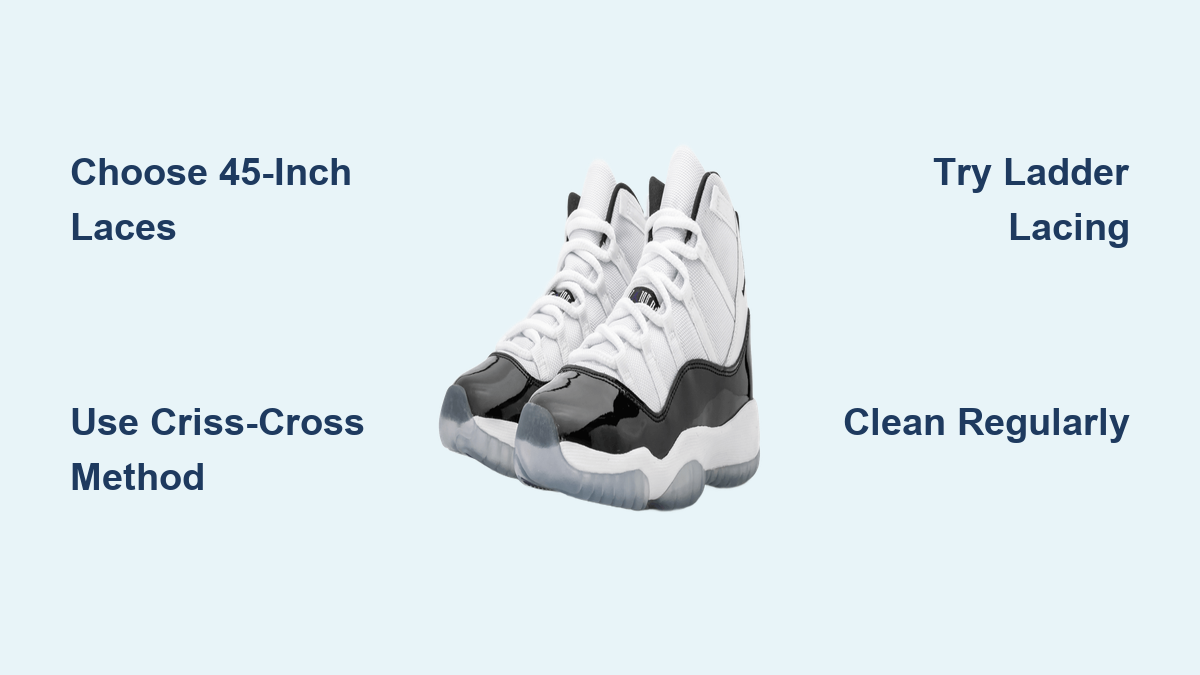
How to Lace Jordan 11
Your Air Jordan 11s look incomplete with factory laces that loosen too fast or lack bold style. Learning how to lace Jordan 11 shoes with premium rope laces instantly upgrades both your fit and your street cred.
This guide details exact lace lengths, four proven lacing methods, and expert maintenance tips to keep your sneakers secure. You will master techniques ranging from the classic criss-cross to the high-support ladder style for a custom look.
Select the Perfect Rope Laces for Jordan 11

Choosing the right rope laces is the first step toward a secure fit and a head-turning aesthetic. The wrong length or material can ruin the silhouette of your high-tops or low-tops.
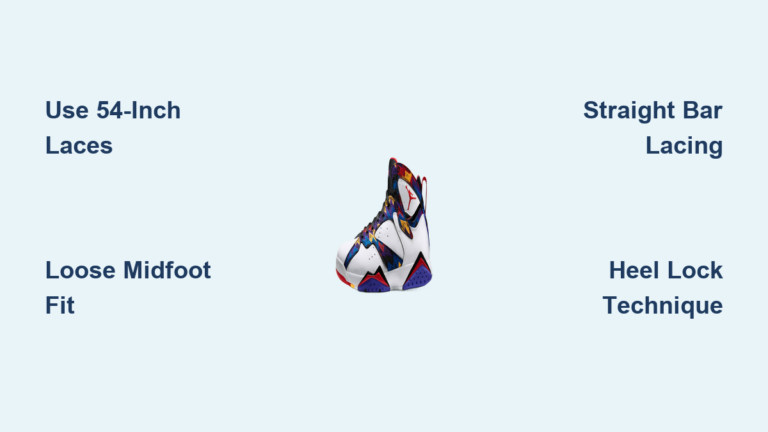
Determine Correct Lace Length
Length dictates whether your laces reach the top eyelets cleanly or leave messy excess hanging down. Use this chart to find your ideal size based on your specific Jordan 11 model.
| Shoe Type | Ideal Rope Lace Length |
|---|---|
| Jordan 11 High-Top | 45–54 inches |
| Jordan 11 Low-Top | 36–45 inches |
Most high-top owners find 45-inch laces perfect for reaching the top with just enough left for a knot. Choose 48 or 54 inches if you prefer tighter lacing or larger decorative knots.
Choose Thickness and Material
Rope laces provide superior durability and support compared to standard flat laces. Their bulkier profile matches the robust design of the Jordan 11 perfectly.
- Diameter: Stick to 5–7mm for a bold look that fits eyelets without strain.
- Material: Cotton or polyester blends offer the best mix of strength and flexibility.
- Aglets: Look for reinforced tips to prevent fraying and ensure easy threading.
Match Colors to Your Style
Color choice transforms the entire vibe of your sneakers from classic to custom. Rope laces are statement pieces that demand attention.
- Monochrome: Black or white laces maintain a clean look for OG colorways like Concord.
- Contrast: Red, blue, or green laces highlight specific details or match your outfit.
- Subtle Flair: Darker laces stay hidden under the collar while bright tips peek through.
Pro Tip: Swap your laces seasonally to give one pair of Jordan 11s multiple personalities without buying new shoes.
Master the Classic Criss-Cross Lacing Method

The classic criss-cross remains the most popular method for daily wear and athletic performance. It distributes pressure evenly across your foot for maximum comfort.
Start at the Bottom Eyelets
Insert both ends of your lace into the lowest eyelets from the outside in. Pull them evenly so both sides match in length before crossing.
Cross Upward Diagonally
Take the left lace and cross it over to the right side, threading it through the next higher eyelet. Repeat with the right lace going to the left side.
- Maintain snug tension to lock your midfoot in place.
- Continue this diagonal pattern until you reach the top eyelets.
Tie a Secure Finish
Finish with a standard bow or a double knot for extra security. This method creates a web-like structure that prevents slipping during activity.
✅ Why it works: It offers balanced tension and minimal friction for all-day wear.
Execute Bar Lacing for a Clean Aesthetic
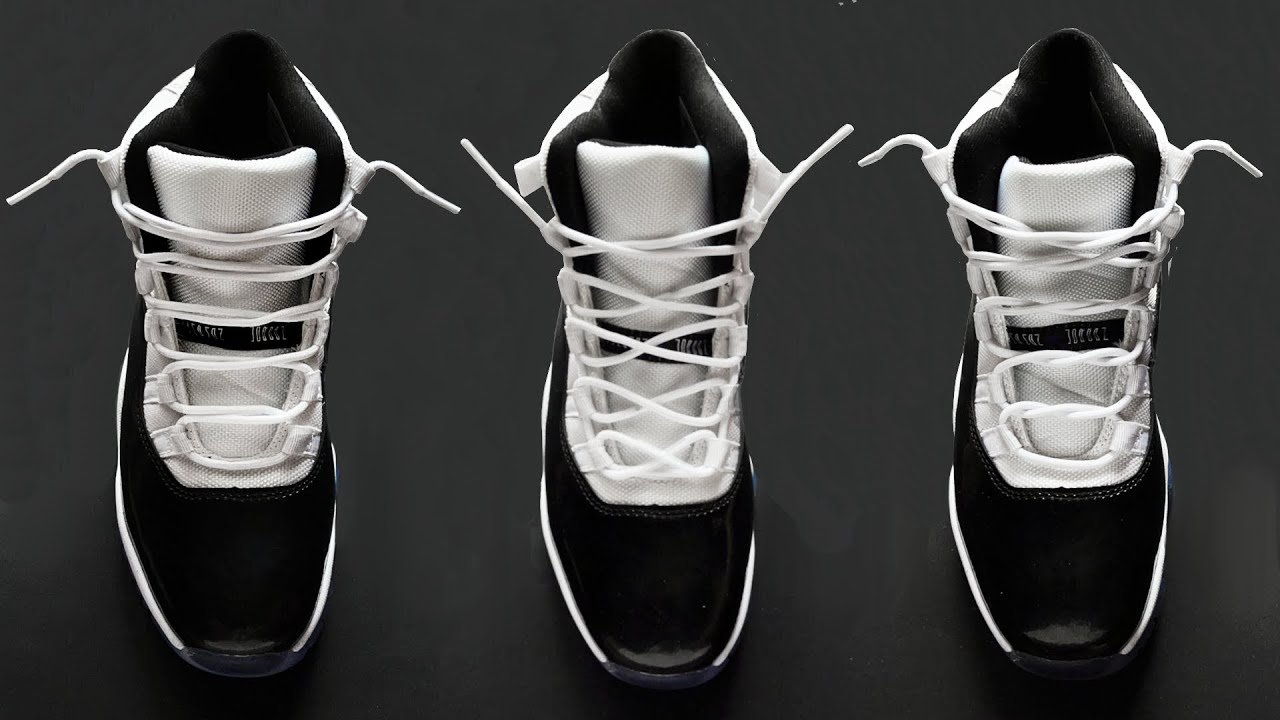
Bar lacing creates straight horizontal lines that give your Jordan 11s a minimalist and custom appearance. This style reduces pressure on the top of your foot.
Begin with Even Ends
Thread the lace through the bottom eyelets from the outside. Ensure both ends are equal before starting the horizontal runs.
Run Laces Straight Across
Feed each lace straight across to the opposite eyelet at the same level. Insert from the outside in to create parallel bars.
- Avoid pulling too tight as this style naturally reduces top-of-foot pressure.
- The result looks like a ladder lying flat against the tongue.
Skip Diagonal Paths
To maintain the straight look, do not cross the laces. Feed the lace up the inside of the shoe to the next eyelet then out and across again.
✅ Visual benefit: This highlights the shoe’s structure and works well with retro-inspired outfits.
Apply Ladder Lacing for Maximum Support

Ladder lacing provides the tightest lockdown for athletes or anyone dealing with heel slip. This advanced technique creates a secure cage around your foot.
Start with a Criss-Cross Base
Begin at the bottom with one standard criss-cross to anchor the heel firmly. This sets a stable foundation for the vertical steps.
Insert Vertically Then Horizontally
Thread each lace straight up through the next eyelet on the same side from inside to outside. Then pass the lace horizontally across to create a “rung.”
- Repeat the vertical up and horizontal across motion to the top.
- This method pulls the upper down firmly over the foot for extra stability.
Alternate Sides for Balance
Work one side at a time to ensure each segment is tight but not constricting. This is ideal for wide feet or high arches needing extra hold.
✅ Pro tip: Use 54-inch rope laces for this method to handle the extra threading length.
Create a Relaxed Look with Loose Lacing

Loose lacing offers a laid-back streetwear vibe by opening up the tongue and reducing tension. It is perfect for casual outings where comfort is key.
Thread Loosely from Bottom
Start at the lowest eyelets with even lace ends. Keep your hands relaxed as you begin the process.
Leave Slack Between Eyelets
Criss-cross upward but intentionally leave about ½ inch to 1 inch of gap between each pair. This reduces tension and lets the tongue sit higher.
- The shoe feels roomy and unstructured.
- Stop before the top eyelet to keep the collar open.
Stop Before the Top
Skip the highest eyelet entirely to expose the cushioned interior. This creates a fashion-forward and undone aesthetic.
✅ Style hack: Pair this look with rolled jeans or joggers to draw attention to the open lacing.
Maintain Rope Laces for Longevity
Proper care extends the life of your rope laces and keeps your Jordan 11s looking fresh. Dirt and grime accumulate quickly in the textured weave.
Clean Laces Regularly
Remove laces completely every 4–6 weeks if you wear them heavily. Soak them in warm soapy water for 15–20 minutes.
- Gently scrub with a soft brush focusing on high-friction zones.
- Rinse thoroughly to remove all soap residue.
- Air dry completely before re-lacing to prevent mildew.
Warning: Never use bleach or harsh chemicals that weaken the fibers.
Protect Eyelets During Swaps
Thick rope laces can snag in eyelets if you rush the swapping process. Unlace slowly and deliberately to avoid damage.
- Check aglets for fraying before re-lacing to avoid jams.
- Apply a tiny bit of silicone spray to aglets if they struggle to slide through.
- Never force laces as this can bend eyelets or tear the upper.
Fix Common Lacing Problems
Even experienced sneakerheads face issues like slipping heels or shifting tongues. Here is how to troubleshoot common problems quickly.
Heel Slipping Issues
If your heel lifts while walking you lack sufficient lockdown. Switch to ladder lacing or tighten the criss-cross tension at the midfoot. Ensure laces reach the top eyelet since skipping them reduces support.
Tongue Shifting Problems
A crooked tongue ruins the clean look of your Jordan 11s. Center the tongue and press it down before lacing. Use bar lacing or criss-cross to pin it evenly on both sides.
Excessive Lace Length
Long lace ends drag on the ground and get stepped on easily. Re-knot with a smaller bow or use a lace lock to manage excess. Never cut rope laces shorter as this risks unraveling the whole strand.
Know When to Replace Your Laces
Rope laces last longer than flat ones but they do not last forever. Recognizing wear signs prevents sudden breakage during wear.
Signs It Is Time for New Laces
Look for fraying at the aglets or mid-lace sections. Stiffness or loss of flexibility indicates the material is degrading. Persistent stains that won’t wash out also signal replacement time.
Replacement Frequency Guidelines
- Average use: Replace every 6–12 months.
- Heavy use: Replace every 6 months for sports or daily wear.
- With proper care: Laces can exceed 12 months of life.
Pro Tip: Keep a spare set on hand since switching laces takes under 5 minutes and instantly refreshes your look.
Frequently Asked Questions About Jordan 11 Lacing
What length rope laces fit Jordan 11 high-tops?
45 inches is the standard length for most high-tops. Use 48–54 inches if you want extra length for tight lacing or larger decorative knots.
Can I use these lacing methods on other Jordan models?
Yes. These techniques work effectively on Jordan 1, Jordan 3, Jordan 4, and other high-tops with similar eyelet layouts and structures.
Are rope laces better than flat laces for Jordan 11?
For performance and durability, yes. Rope laces offer more support, hold tension better, and resist fraying compared to flat laces which lack structure.
Do colored laces affect the resale value of Jordan 11s?
Only if they are non-OEM and poorly matched to the shoe. Clean original-style laces preserve value while bold custom laces are great for personal wear.
How do I prevent rope laces from fraying?
Avoid dragging laces on the ground and store them tucked when not in use. Trim aglets if they split and apply clear nail polish to seal the ends.
Key Takeaways for Lacing Your Jordan 11
Mastering how to lace Jordan 11 shoes transforms both their comfort and visual impact. Selecting the right rope lace length and applying the correct technique ensures your sneakers stay secure and stylish.
Start with the classic criss-cross for daily wear or try ladder lacing for maximum support. Maintain your laces regularly and swap them out when signs of wear appear to keep your Jordan 11s in top condition.