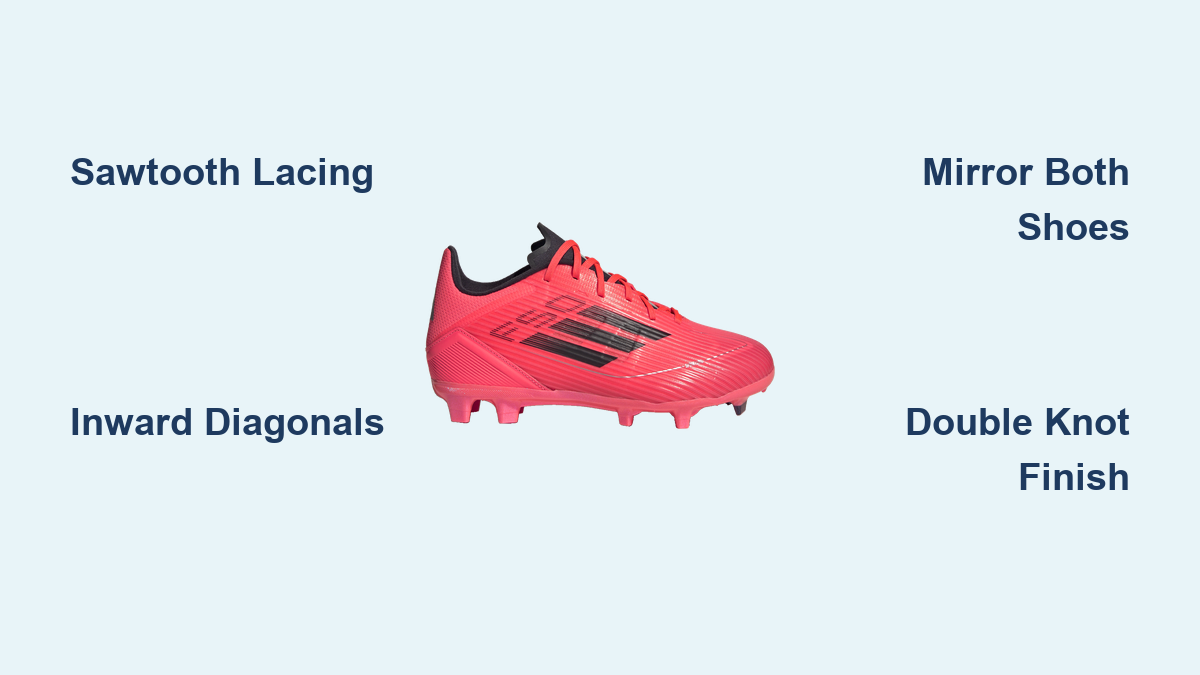
How to Lace Adidas F50
Asking how to lace Adidas F50 cleats shows you understand that fit equals performance. These speed boots demand a locked-down feel to prevent slipping during explosive cuts and sprints. The wrong technique leaves your foot loose, but the right one boosts traction and safety instantly.
This guide teaches the official Sawtooth Lacing Method step by step. You will learn to create inward angles, mirror both shoes correctly, and ensure your cleats are ready for emergency removal if injuries occur.
Execute the Sawtooth Lacing Method
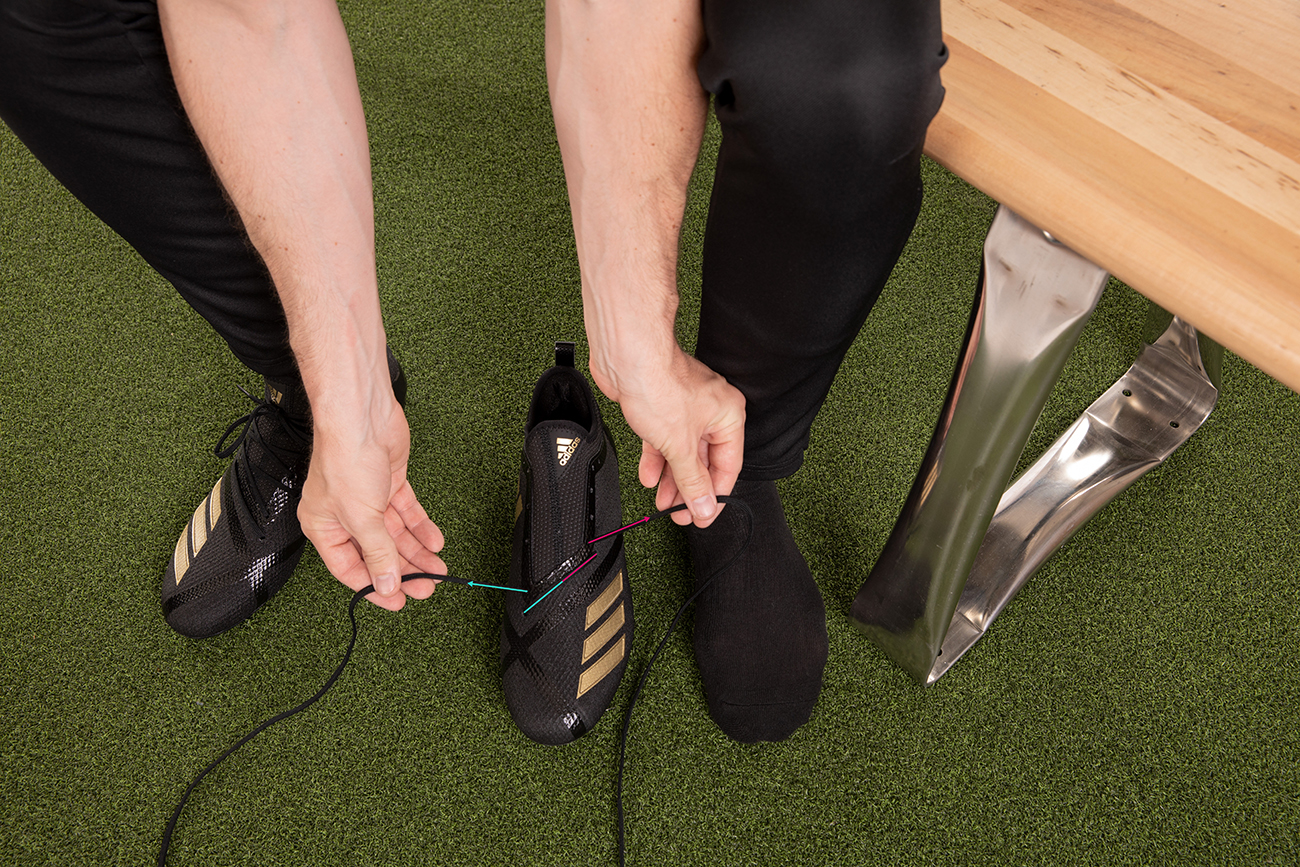
The Sawtooth Lacing Method is the gold standard for Adidas F50 football cleats. This technique creates a secure fit that prevents foot movement inside the shoe during high-speed plays. Unlike standard criss-cross patterns, this method uses vertical and diagonal strands to lock your midfoot in place.
Start with Even Initial Threading
Begin by threading the lace through the bottom eyelets from the inside out. Pull both ends until they are equal in length to ensure balanced tension as you move upward.
- Use flat or round laces that resist slipping.
- Center the tongue before starting the pattern.
- Avoid pulling too tight at the base to maintain circulation.
This foundation sets up the entire lacing structure. Uneven lengths lead to uneven tension, which compromises your fit and stability on the field.
Perform the Vertical Rise on the Left
Take the left lace end and run it straight up the inside of the shoe to the second eyelet on the left side. Do not cross over the tongue yet.
Once it exits the second eyelet, pull it horizontally across to the corresponding right-side eyelet at the same level. This creates your first horizontal bar over the tongue.
This vertical rise followed by a straight cross forms the base of the sawtooth pattern. It keeps pressure distributed evenly across your instep for better control.
Weave the Diagonal from the Right
Take the right lace end, which is still at the bottom level, and pass it diagonally up and over the horizontal lace you just created. Thread it through the third eyelet on the left side, one level above the previous exit point.
After it comes out, pull it straight across to the adjacent eyelet on the right side. This creates another horizontal bar across the tongue.
You now have one vertical lace, one diagonal lace, and two horizontal bars. This diagonal-over-horizontal weave gives the pattern its name and functional grip.
Repeat the Pattern Upward
Continue the sequence by taking the left lace, currently on the right side, and running it diagonally up and over the latest horizontal bar. Insert it into the next available left-side eyelet one level higher.
Pull it straight across to the matching right-side eyelet. Alternate sides with each diagonal pass, always moving up one level and crossing over the previous horizontal lace.
As you progress, the inward-pointing diagonal lines begin to resemble the teeth of a saw blade. This repetition builds the tension needed for elite performance.
Finish with a Secure Double Knot
When one lace reaches the top-left eyelet, take the remaining end and run it straight up the inside of the shoe to the top-right eyelet. Both ends should now meet at the top of the cleat.
- Pull both laces firmly to tighten the entire system.
- Tie a double knot to prevent loosening during play.
The double knot is non-negotiable since single knots come undone fast under sprint stress. Wrap the knot around the ankle collar once before tying to reduce lace flapping.
Ensure Correct Inward Angle Direction
Verify Diagonals Point Inward
One of the most common mistakes when learning how to lace Adidas F50 cleats is incorrect angle direction. The diagonal laces must point inward toward the center of your foot to create the locked-down fit.
If the diagonals point outward, the lacing actually loosens the upper instead of tightening it. This error defeats the entire purpose of the Sawtooth method and reduces stability.
To check your work, look down at your laces from above. The diagonal lines should form a “V” shape pointing toward your instep on both shoes.
Mirror Both Shoes Correctly
Achieve Symmetrical Fit on Both Feet
Your left and right cleats must be mirror images of each other rather than identical copies. This means the diagonals on the left shoe go from right to left upward, while the right shoe diagonals go from left to right upward.
Both shoes must create inward-pointing angles toward your body’s centerline. If both shoes have diagonals going the same direction, the tension pulls asymmetrically and causes discomfort.
Double-check before every game to ensure symmetry. A mismatched pair can throw off your balance during quick cuts and rapid direction changes.
Maximize Traction and Stability Benefits
Prevent Foot Slippage During Play
The primary benefit of proper Adidas F50 lacing is maximum traction through superior foot control. With the Sawtooth method, your foot stays fixed inside the cleat during sprints and rapid acceleration.
No heel lift occurs during rapid acceleration, and lateral cuts feel sharper and more responsive. This stability comes from the uniform pressure applied across the midfoot by the horizontal bars.
Players who switch from standard lacing report feeling glued to the ground. This effect is especially noticeable on artificial turf or wet grass conditions where grip is critical.
Enable Emergency Lace Cutting Protocols
Prepare for Injury Response Scenarios
One often-overlooked reason this lacing method is standard in football is safety. In the event of a foot or ankle injury like a fracture or severe sprain, medical staff need to remove the cleat quickly.
The Sawtooth pattern exposes the laces clearly across the top of the foot, making them easy to cut with scissors or shears. There are no hidden knots or buried ends to slow down the process.
Fast removal reduces secondary damage to the injured area. This is why coaches and trainers insist on this method for protection as well as performance.
Avoid Common Lacing Mistakes
Do Not Cross Under or Skip Eyelets
Many players try to speed up lacing by skipping steps or improvising, which leads to poor results. Avoid lacing under the tongue as this creates pressure points and hot spots on your foot.
- Skipping eyelets weakens support and causes uneven tension distribution.
- Outward diagonal angles loosen the fit instead of tightening it effectively.
- Single knots come undone mid-game and compromise your safety.
Also, avoid using elastic or no-tie laces on Adidas F50s for competitive play. They do not allow for emergency cutting and fail to provide the necessary locked-down fit.
Maintain Your Lacing Over Time
Re-Lace Before Every Game Session
Even if you laced correctly last week, always re-lace your Adidas F50s before each use. Laces stretch slightly after wear, and knots loosen over time due to activity.
Dirt and grass buildup can also affect tension and reduce the effectiveness of the pattern. Replace frayed or worn laces immediately to maintain optimal performance.
Use flat polyester or nylon laces between 80 and 100cm depending on your eyelet count. Proper maintenance ensures your cleats remain safe and ready for action.
Frequently Asked Questions About Lacing Adidas F50 Cleats
Why must the diagonal laces point inward?
The inward angle creates a locking mechanism that tightens the shoe around your foot during movement. If they point outward, the laces loosen when you run, causing slippage and reduced stability.
Can I use elastic no-tie laces for my Adidas F50?
No, you should avoid elastic laces for competitive play because they cannot be cut quickly in an emergency. Standard flat polyester or nylon laces are required for safety protocols.
How do I know if my left and right shoes are mirrored correctly?
Look down at your feet to ensure the diagonal lines on both shoes point toward your instep. If both sets of diagonals lean the same way relative to your body, they are not mirrored correctly.
What type of knot prevents loosening during games?
You must tie a double knot to ensure extra durability and prevent untying during play. Single knots often come undone under the stress of sprinting and cutting.
How does this lacing method help with injuries?
The exposed lace pattern allows medical staff to cut the laces quickly with shears if you suffer a foot or ankle fracture. This enables fast shoe removal without moving the injured limb.
Key Takeaways for Lacing Your Adidas F50
Mastering how to lace Adidas F50 cleats transforms your gear into a performance advantage. The Sawtooth method provides a locked-down fit that prevents slippage, ensures stability during explosive moves, and allows for emergency removal if injuries occur.
Always verify that your diagonal laces point inward and that both shoes are mirrored correctly. Take two minutes before every game to lace your cleats properly and tie a secure double knot.
Your feet will thank you when you burst past defenders with confidence. Follow these steps to unlock the full potential of your Adidas F50 cleats today.