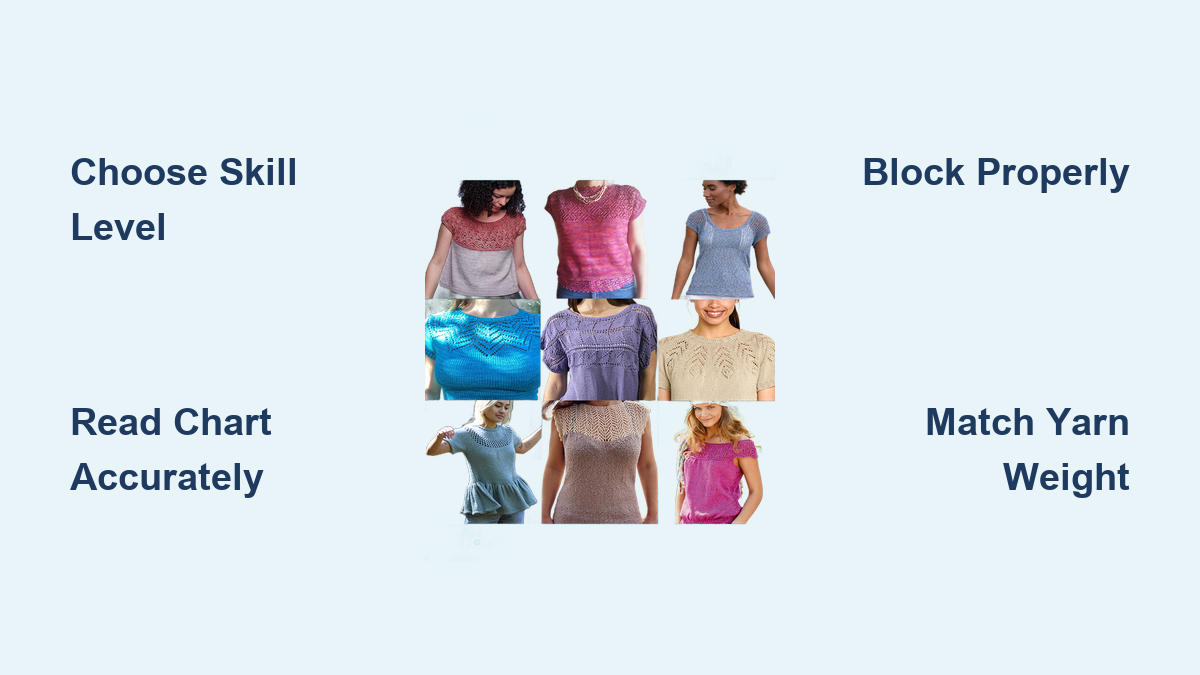
Easy Lace Blouse Knitting Pattern for Beginners
Knitting a lace blouse creates an elegant garment that blends timeless style with breathable comfort for warm weather. Whether you seek a vintage silhouette or a modern seamless design, a lace blouse knitting pattern offers endless ways to craft lightweight pieces perfect for layering or standalone wear. These projects utilize openwork techniques like yarn overs and decreases to form intricate fabrics that drape beautifully from casual days to special occasions.
Options range from beginner-friendly eyelet tops to advanced modular constructions suitable for every skill level. Modern designs increasingly feature inclusive sizing and clear instructions that minimize seaming for greater accessibility. This guide reveals top-rated patterns, essential techniques, and yarn recommendations to help you select and complete your next project with confidence. You will learn how to choose the right fit, master key skills, and ensure a stunning result.
Choose Your Ideal Lace Blouse Pattern
Selecting the right design begins with matching the project to your current abilities and wardrobe needs. Lace knitting can be approachable when you choose a pattern with repetitive motifs or simple eyelet combinations.
Match Style to Skill Level
Align your project choice with your knitting experience to ensure success.
* Beginner-Friendly: Look for labels like “easy lace” or “eyelet top.” These use simple repeats of k2tog, ssk, and yarn overs. Examples include the Blossom Lace Top and Knitting Capelet.
* Intermediate: Patterns like the Barbroe Blouse introduce chart reading and set-in sleeves. They require attention to gauge but are manageable with practice.
* Advanced: Designs like the Woven Air Top demand precision with fine lace-weight yarns and complex weaves.
Pick the Right Fit and Silhouette
Your desired look dictates the pattern you should choose.
* Fitted: The Barbroe Blouse uses negative ease, meaning you knit a size smaller than your chest for a snug look.
* Relaxed: The Honeycomb Top uses positive ease for a breezy, flowy silhouette ideal for beach cover-ups.
* Adjustable: Camisole styles often feature adjustable straps for a custom fit across various sizes.
Consider Construction Method
How a blouse is built affects both knitting time and final comfort.
* Bottom-Up Circular: Works the body in the round to underarms, minimizing side seams.
* Top-Down: Allows you to try on the piece as you go and adjust length easily.
* Modular: Uses vertical sections to eliminate seams entirely for a polished finish.
* Flat Knitting: Works the garment in two pieces, which is easier for those new to circular knitting.
Top-Rated Lace Blouse Patterns

Several standout designs offer distinct advantages depending on your style preferences and yarn stash.
Barbroe Blouse: Classic Fit with Keyhole Detail
This favorite features timeless elegance and a flattering shape with a keyhole back.
* Construction: Worked bottom-up in the round, then split for shaping. Sleeves are attached using mattress stitch.
* Yarn: Supports over 100 colors from Knitting for Olive. Dark shades make lace holes pop while light tones create subtle texture.
* Fit: Designed with negative ease. Always check the schematic and block swatches to ensure accuracy before starting.
My Lace Top: Lightweight and Layerable
This versatile sleeveless top is perfect for weddings or summer layering.
* Yarn: Uses two strands of Sandnes Garn Tynn Line held together for structure without stretch.
* Gauge: 20 stitches equal 4 inches in lace and stockinette.
* Blocking: Pre-blocking width expands by about 2 cm after blocking. Always block your swatch to account for this growth.
* Rating: Highly rated for style, though chart readers will thrive more than beginners.
Modular Lace Blouse: Seamless and Modern
An innovative design for knitters wanting a high-end look without seaming.
* Method: Constructed vertically in clockwise and counterclockwise sections to eliminate traditional seams.
* Finish: Edges use a crocheted bind-off for a delicate, flexible result.
* Access: Available via PieceWork subscription for intermediate to advanced knitters.
Free and Budget-Friendly Lace Patterns
High-quality patterns are available for free or under $6, making lace knitting accessible to everyone.
Beginner to Intermediate Options
- Lace Leaf Top: Features leaf motifs and a cropped fit using DK or light worsted yarn. Great for learning basic repeats.
- Blossom Lace Top: Uses fingering weight yarn for floral panels and a V-neck. Ideal for a first lace project.
- Boho Bell Sleeve Blouse: Offers dramatic bell sleeves with stitch guides and sizing charts included.
Vintage-Inspired and Retro Styles
- 1960s Retro Lace Blouse: A fitted silhouette with a flared hem and optional button-up front.
- White Lace Tank Top: A seamless, vintage-inspired piece with lace edging and short-row shaping.
Cover-Ups and Layering Pieces
- Honeycomb Top: An oversized, see-through crop top perfect for beachwear.
- Pi Camisole: Minimalist lace panels ideal for layering under sheer tops.
- Knitting Capelet: A beginner-friendly shrug with video tutorials and adjustable length.
Master Key Lace Knitting Techniques
Success in lace knitting relies on specific skills that ensure your fabric looks professional and fits correctly.
Read Charts Like a Pro
Most lace patterns use charts instead of written rows.
* Use Stitch Markers: Place them between chart repeats to avoid losing your place.
* Follow Row Numbers: Read bottom to top, right to left on right-side rows.
* Learn Symbols: O equals yarn over, \ equals k2tog, and / equals ssk.
Maintain Even Tension
Lace fabric reveals every inconsistency in your tension.
* Practice with Swatches: Knit a 6×6 inch swatch in pattern, wash, and block it.
* Use Smoother Needles: Metal or bamboo needles help yarn glide evenly.
* Avoid Tight Decreases: Use a thinner double-pointed needle for decreases if needed.
Block to Open the Pattern
Blocking is non-negotiable for lace garments to achieve proper drape.
1. Submerge the piece in lukewarm water with mild wool wash.
2. Gently squeeze out water without wringing.
3. Roll in a clean towel to remove excess moisture.
4. Pin to measurements using rust-proof pins, stretching gently.
5. Let dry completely for 12 to 24 hours.
Pro Tip: Blocking can increase width by 5 percent, so always factor this into your sizing calculations.
Choose the Best Yarn for Lace

Your yarn choice dramatically affects the drape, warmth, and appearance of the final blouse.
Match Weight to Desired Drape
- Lace Weight: Best for airy, delicate drape in patterns like Woven Air Top.
- Fingering: Offers detailed lace with structure, used in My Lace Top.
- Sport/DK: Provides balanced drape and warmth for items like the Barbroe Blouse.
- Worsted: Creates textured, quick-knit projects with larger openwork.
Select Fibers for Performance
- Cotton/Linen Blends: Breathable and hold shape well, ideal for warm climates.
- Silk Blends: Offer luxurious drape and shine but require hand washing.
- Wool/Synthetic: Provide durability and resilience, often used in superwash blends.
Let Color Enhance the Design
Color choice impacts how the lace pattern is perceived by the eye.
* Light and Undyed: Highlights texture through shadow play for a subtle look.
* Saturated and Dark: Makes lace holes pop due to high contrast.
* Variegated: Softens the visual impact for an organic, painterly effect.
Size, Fit, and Adjustments

Accurate measurements and understanding ease are critical for a garment that fits well.
Measure Before You Cast On
Always start with accurate body measurements rather than relying on standard size labels.
* Chest Circumference: Measure around the fullest part of your chest.
* Length: Measure from shoulder to desired hemline.
* Compare to Schematic: Use the pattern’s finished measurements to select your size.
Account for Blocking Expansion
As seen in My Lace Top, blocking adds approximately 2 cm in width.
* Knit a swatch in the actual pattern stitch.
* Block it using the same method you will use for the garment.
* Measure pre- and post-block to calculate growth accurately.
Modify for Better Fit
Do not be afraid to tweak a pattern to suit your body.
* Lengthen or Shorten: Add or subtract rows in the body or sleeves.
* Adjust Bust: Use short rows or increase stitch count in the front panel.
* Widen Shoulders: Add stitches at the armhole or adjust the sleeve cap.
Care and Longevity Tips
Proper maintenance ensures your handmade lace blouse remains beautiful for years.
Wash with Care
Most lace blouses require hand washing in cool water with gentle detergent.
* Avoid Agitation: Squeezing or wringing can distort the delicate lace structure.
* Dry Flat: Always reshape and dry flat to maintain original dimensions.
Prevent Snags and Runs
Openwork fabrics are delicate and prone to catching on objects.
* Store Carefully: Fold your garments instead of hanging to prevent shoulder stretching.
* Avoid Rough Jewelry: Sharp edges on necklaces can catch on yarn loops.
* Repair Snags: Use a crochet hook to gently pull snagged loops back through.
Use Leftovers Wisely
Patterns like My Lace Top are perfect for using up leftover yarn. Save scraps for small projects like edgings, cuffs, or even a matching shawl to maximize your materials.
Frequently Asked Questions About Lace Blouse Knitting Patterns
What skill level is needed for a lace blouse knitting pattern?
Beginner patterns use simple eyelet repeats, while intermediate ones require chart reading. Advanced projects involve complex weaves and fine yarns. Choose based on your comfort with decreases and tension control.
How much does a typical lace blouse pattern cost?
Standard digital patterns range from €6.50 to €6.60. Discounted vintage styles may cost under $2, while some exclusive designs require a magazine subscription. Free options are also widely available online.
Why is blocking essential for lace knitting?
Blocking opens up the lace stitches to reveal the pattern and ensures correct dimensions. It can increase fabric width by about 5 percent and significantly improves drape.
Can I use different yarn than the pattern suggests?
Yes, but you must match the gauge and consider fiber properties. Cotton blends offer structure, while silk provides drape. Always knit a swatch to verify your substitution works.
How do I fix a mistake in a lace chart?
Use stitch markers between repeats to isolate errors. If you miss a yarn over or decrease, drop stitches down to the error and re-knit that column using a crochet hook.
Key Takeaways for Your Lace Blouse Knitting Pattern Success

Creating a lace blouse is a rewarding journey that combines technical skill with artistic expression. Success depends on selecting a pattern that matches your skill level, choosing the right yarn for your desired drape, and committing to proper blocking techniques. Whether you choose a fitted Barbroe Blouse or a breezy Honeycomb Top, careful attention to gauge and construction will yield a garment you will treasure.
Ready to start your project? Gather your needles, select a pattern that excites you, and cast on with confidence. Your perfect summer top awaits creation.