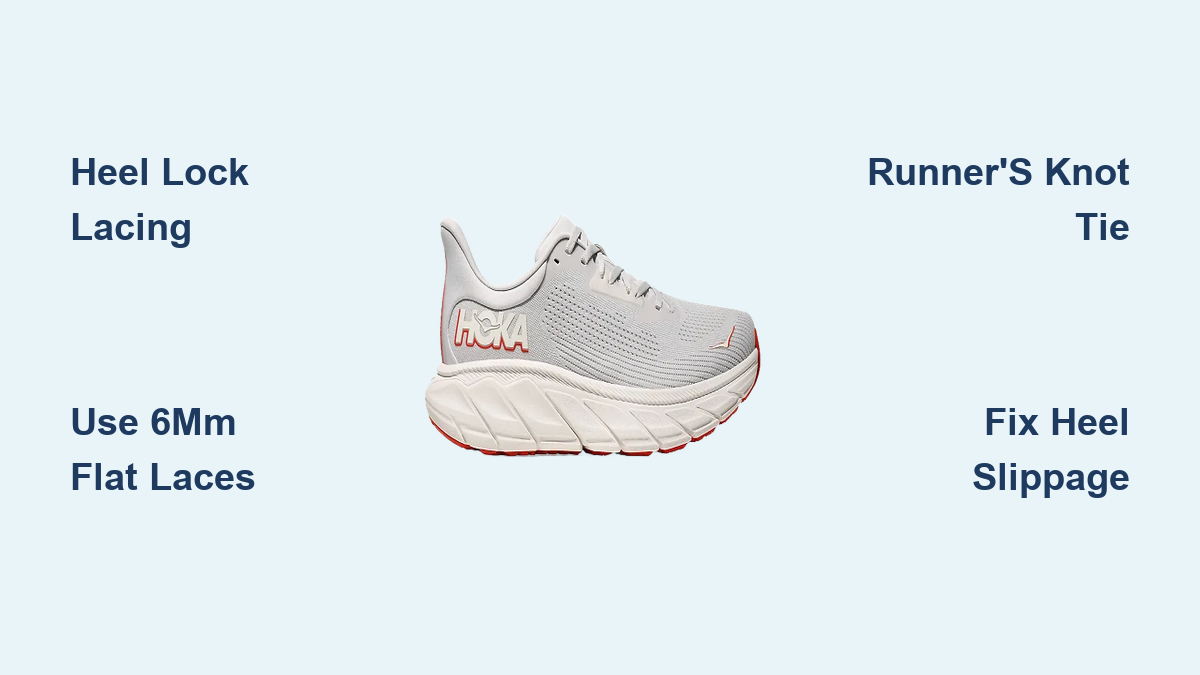
How to Lace Hoka Arahi 7
If your Hoka Arahi 7 feels loose around the heel or slips during runs, the problem might not be the fit but how you are lacing them. The Hoka Arahi 7 is a stability shoe designed for overpronators, yet poor lacing can compromise its engineering and cause blisters.
You will learn exactly how to lace Hoka Arahi 7 shoes using the Runner’s Knot to lock your heel in place. This guide also covers selecting replacement laces, fixing common fit issues, and maintaining your gear for long-term comfort.
Apply the Heel Lock Lacing Method
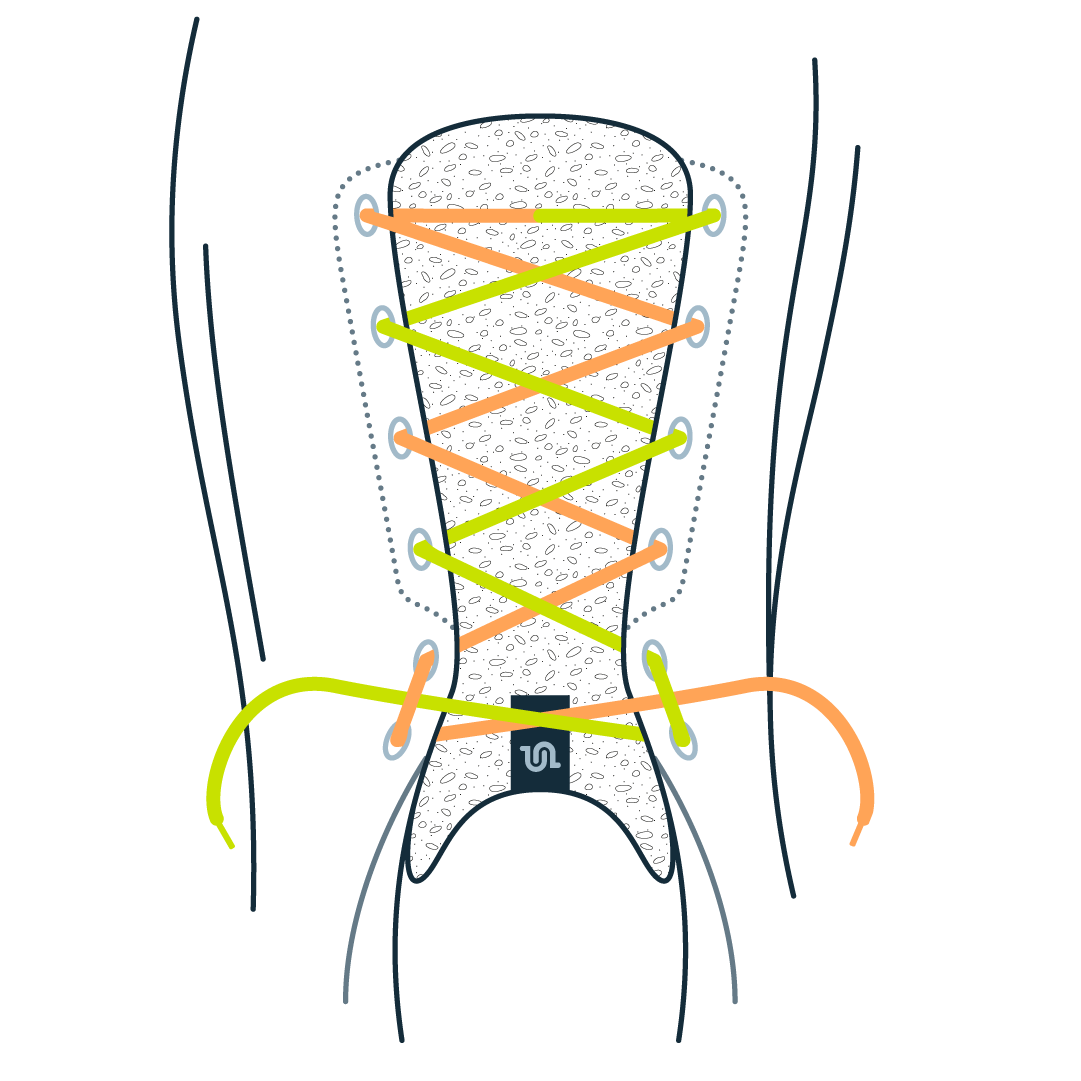
The Heel Lock method is the gold standard for runners using the Hoka Arahi 7. It eliminates heel lift, boosts ankle support, and enhances the shoe’s built-in stability without over-tightening the forefoot.
Step-by-Step: Tie a Runner’s Knot
- Start with standard crisscross lacing up to the second-to-last eyelet.
- Instead of crossing the laces, thread the left lace straight up into the top eyelet on the left side.
- Repeat with the right lace, threading it straight up into the top eyelet on the right side.
- This creates two small vertical loops at the top of the shoe.
- Cross the left lace over to the right and feed it through the right-side loop.
- Cross the right lace over to the left and feed it through the left-side loop.
- Pull both laces outward and downward to tighten the loops around your ankle.
- Tie a regular bow knot with the remaining lace ends.
Pro Tip: Pull the loops tight before tying the bow. This ensures the heel counter hugs your calcaneus securely.
Why This Works for Arahi 7
The Hoka Arahi 7 features a structured heel cup designed to guide foot motion and correct overpronation. But if your heel isn’t locked in, that stability is compromised. The Heel Lock:
* Prevents vertical heel slippage during strides
* Reduces blisters from friction
* Enhances lateral control on turns
* Improves energy transfer from foot to shoe
Runners report a “locked-in” feel that boosts confidence during speedwork and long runs. It’s especially effective for those with narrow heels or high arches who often struggle with fit.
Select Correct Replacement Laces

When original laces fray or wear out, replacing them with the right specs keeps your Arahi 7 performing like new.
Choose the Right Length
- 120 cm (47 in): Ideal for standard lacing patterns
- 140 cm (55 in): Best for Heel Lock or runners who prefer longer bows
Recommendation: Go with 120 cm if unsure. Shorter laces reduce tripping risk and excess bulk.
Match OEM Specifications
- Width: 6mm flat laces (critical for proper eyelet fit)
- Material: Cotton-polyester blend (soft knotting + durable)
- Aglets: Plastic tips for smooth threading and fraying resistance
Using laces that are too thin or round reduces tension control. Too thick, and they won’t thread easily. Stick to 6mm flat laces to maintain the shoe’s intended fit.
Customize With Color Options
Replacement laces let you refresh worn shoes or match your gear. Popular choices:
* Neutrals: Black, White, Grey (subtle, OEM-matching)
* Brights: Neon Green, Red, Royal Blue (high visibility)
* Style Picks: Navy, Sky Blue (aesthetic “pop”)
Many users say bright laces make older shoes look “brand new” — a cheap upgrade with big visual impact.
Prevent Common Lacing Problems

Even with the right laces, fit issues can arise. Here’s how to fix them fast.
Fix Heel Slippage
Symptom: Heel lifts with each step, causing friction or discomfort.
Solution: Use the Heel Lock method. Ensure loops are pulled tight before tying the bow.
Check: If slippage continues, verify your shoe size — lacing can’t fix a shoe that’s too big.
Stop Laces Coming Untied
Symptom: Bow loosens mid-run.
Solution: Tie a surgeon’s knot (double-cross the laces before the bow) for extra security.
Also: Replace worn laces — smooth, frayed laces lose grip.
Relieve Top-of-Foot Pressure
Symptom: Numbness or pain across the instep.
Solution:
* Skip an eyelet in the middle to reduce pressure
* Re-lace without twisting the laces
* Loosen the midfoot section while keeping heel and toe secure
This “window lacing” technique maintains stability where you need it and relieves tight spots.
Fix Difficult Threading
Symptom: Laces won’t pass through eyelets easily.
Solution:
* Confirm lace width is 6mm (not thicker)
* Check aglets — if frayed, trim slightly or reseal with heat
* Clean eyelets of dirt buildup that can block lace entry
Worn or damaged aglets are a common cause of frustration — new laces with intact tips solve this instantly.
Maintain Laces and Extend Shoe Life
Proper care keeps your Hoka Arahi 7 looking and performing great for miles.
Spot Wear Before Failure
Inspect laces regularly for:
* Fraying near eyelets or crossover points
* Thinning or soft spots from repeated stress
* Loose fibers or unraveling ends
Replace laces before they break during a run. Many users report original laces lasting hundreds of miles, but high-impact use accelerates wear.
Clean Shoes Before Relacing
Before installing new laces:
1. Remove old laces and insoles
2. Brush away dirt from mesh and eyelets
3. Wipe down the tongue and collar
4. Let dry completely
This prevents grit from damaging new laces and restores breathability. A clean shoe with fresh laces feels like a new pair.
Buy Smart: Bulk and Value
Replacement laces cost around $8.99/pair — a fraction of a new shoe. Save more by:
* Buying 3 pairs (10% off) for color rotation
* Getting 6 pairs (20% off) for backup and variety
Stock up on black and white for daily use, bright colors for races or night runs.
Optimize Fit for Long Runs
The right lacing isn’t just about security — it’s about endurance, comfort, and injury prevention.
Test Lacing Before Race Day
Never try a new lacing method on race day. Test the Heel Lock on a short run first. Adjust tightness to avoid numbness while ensuring no heel lift.
Expert Note: The Arahi 7’s J-Frame™ stability works best when the foot is fully secured. A loose heel undermines the shoe’s corrective design.
Adjust for Swelling on Long Distances
Feet expand during long runs. To prevent tightness:
* Lace loosely through the midfoot
* Keep heel and forefoot secure
* Use the Heel Lock to maintain anchor points
This “progressive tension” approach prevents constriction while maintaining control.
Pair Lacing With Sock Choice
Wear moisture-wicking running socks (not cotton). Thin, seamless socks reduce friction and work best with the Heel Lock to prevent blisters.
Frequently Asked Questions About Lacing Hoka Arahi 7
What is the best lace length for Hoka Arahi 7?
The optimal length is 120 cm for standard lacing. If you plan to use the Heel Lock method or prefer larger bows, choose 140 cm laces for extra length.
Why do my Hoka laces keep coming undone?
Your laces may be worn smooth or tied incorrectly. Try using a surgeon’s knot for extra security or replace old laces with a cotton-polyester blend for better friction.
Can I use round laces instead of flat laces?
It is not recommended. The Arahi 7 is designed for 6mm flat laces which distribute tension better. Round laces may slip more easily and fail to fill the eyelets properly.
How do I stop my heel from slipping in Hoka Arahi 7?
Use the Runner’s Knot (Heel Lock) technique. This creates vertical loops that pull the heel counter snugly against your ankle, preventing lift and blisters.
How often should I replace my running shoe laces?
Inspect them regularly for fraying or thinning. Replace laces before they break completely, especially if you notice visible wear near the eyelets or aglets.
Key Takeaways for Fixing Your Hoka Arahi 7 Fit
Mastering how to lace Hoka Arahi 7 shoes can completely transform your running experience. The Heel Lock method is the most effective solution for preventing heel slippage and maximizing the stability features of the Arahi 7. By securing your heel properly, you reduce blisters and improve energy transfer during every stride.
Always choose 6mm flat replacement laces in the correct length (120 cm or 140 cm) to maintain the shoe’s intended performance. Regular maintenance, such as cleaning your shoes before relacing and checking for wear, extends the life of both your laces and your shoes. Start with the Heel Lock on your next run to feel the difference immediately.