
The 10 Most Popular Types of Lace
Your dream wedding dress might feature intricate florals or open geometric patterns, but knowing the specific types of lace ensures you choose the right fabric for your vision. From the regal relief of Venetian designs to the breezy charm of eyelet, each variety offers a distinct look and feel that defines the final garment.
This guide breaks down the history, manufacturing methods, and key characteristics of major lace styles to help you make an informed decision. You will learn how to distinguish between hand-crafted heirlooms and machine-made alternatives while understanding which materials offer the best durability for your special day.
Historical Origins and Evolution of Lace Making
Lace emerged as a distinct textile art form in the sixteenth century, with Venice serving as the initial epicenter of production. As trade routes expanded, the craft spread rapidly across Europe, evolving into a symbol of immense wealth and status among the nobility.
Industrial Shifts and Modern Production
The eighteenth century introduced machinery that transformed lace from an exclusive handcraft into a scalable industry. While hand-made production declined significantly after World War I, traditional techniques survive today in haute couture and artisanal workshops.
Bridal Symbolism and Cultural Legacy
Designers often describe working with lace as painting in cloth due to its romantic and timeless quality. French and Italian varieties carry particular prestige, making them top choices for brides seeking to incorporate heritage and artistry into their gowns.
How Lace Is Made: Techniques and Materials
The creation method fundamentally defines the value, texture, and uniqueness of the final fabric. Hand-made pieces offer irregularities that add character, while machine production ensures precision and consistency for larger projects.
Hand-Made vs Machine Production
Hand-crafted lace utilizes crochet, needlework, or bobbin techniques to create one-of-a-kind pieces where no two are identical. Machine-made options, particularly those from Leavers looms, offer high complexity and are the standard for modern couture.
Material Composition Breakdown
Historically, artisans used silk thread for its sheen, but pure silk is now rare due to its extreme fragility. Modern couture laces typically use cotton or rayon blends reinforced with nylon or polyester to provide necessary strength and flexibility.
Key Manufacturing Technologies
The Leavers loom, refined with Jacquard punch cards, manages up to 50,000 threads to weave intricate motifs with significant depth. Raschel machines produce lace more quickly and affordably, though they generally lack the refinement of Leavers output.
Major Types of Lace for Fashion and Bridal
Selecting the right fabric depends on understanding the visual profile and structural integrity of different types of lace. Each variety offers unique aesthetic vibes ranging from vintage elegance to bohemian relaxation.
Alençon Lace: The Queen of Elegance

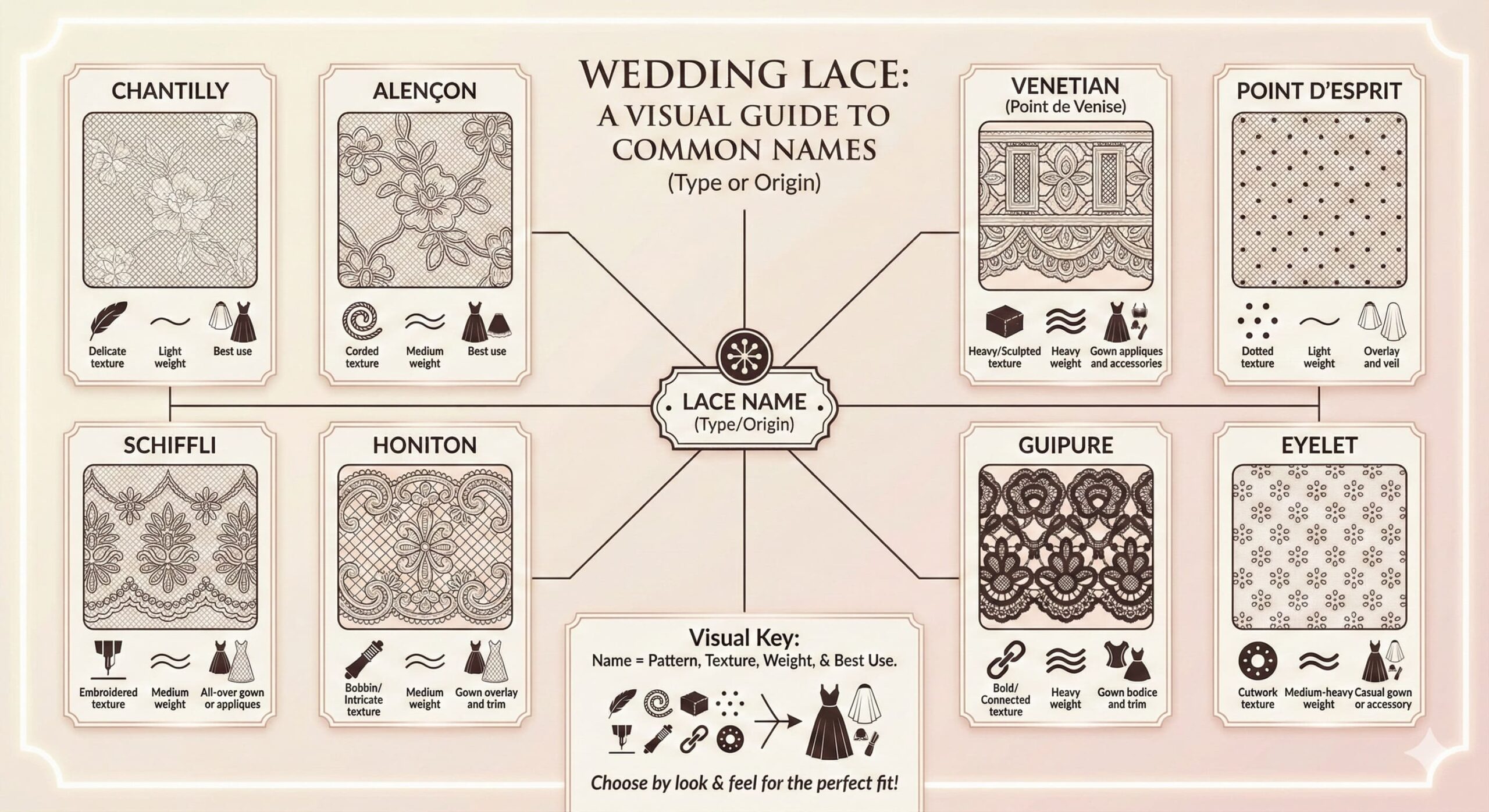
Alençon lace features bold, opaque floral designs set atop a sheer mesh background with raised scroll patterns. Originating in France, this labor-intensive style creates a three-dimensional look resembling floral appliqué.
Why It Stands Out
The defining trait is the 3D relief where floral scrolls appear almost appliquéd onto the net. This structure allows the fabric to stand alone without lining, making it ideal for sleeves or bodices in vintage-style gowns.
Best Uses and Aesthetic Fit
Designers favor this expensive lace for formal ceremonies where tradition and opulence matter most. It is often applied as an accent rather than covering entire garments due to its high cost and dramatic visual impact.
Chantilly Lace: Delicate and Timeless
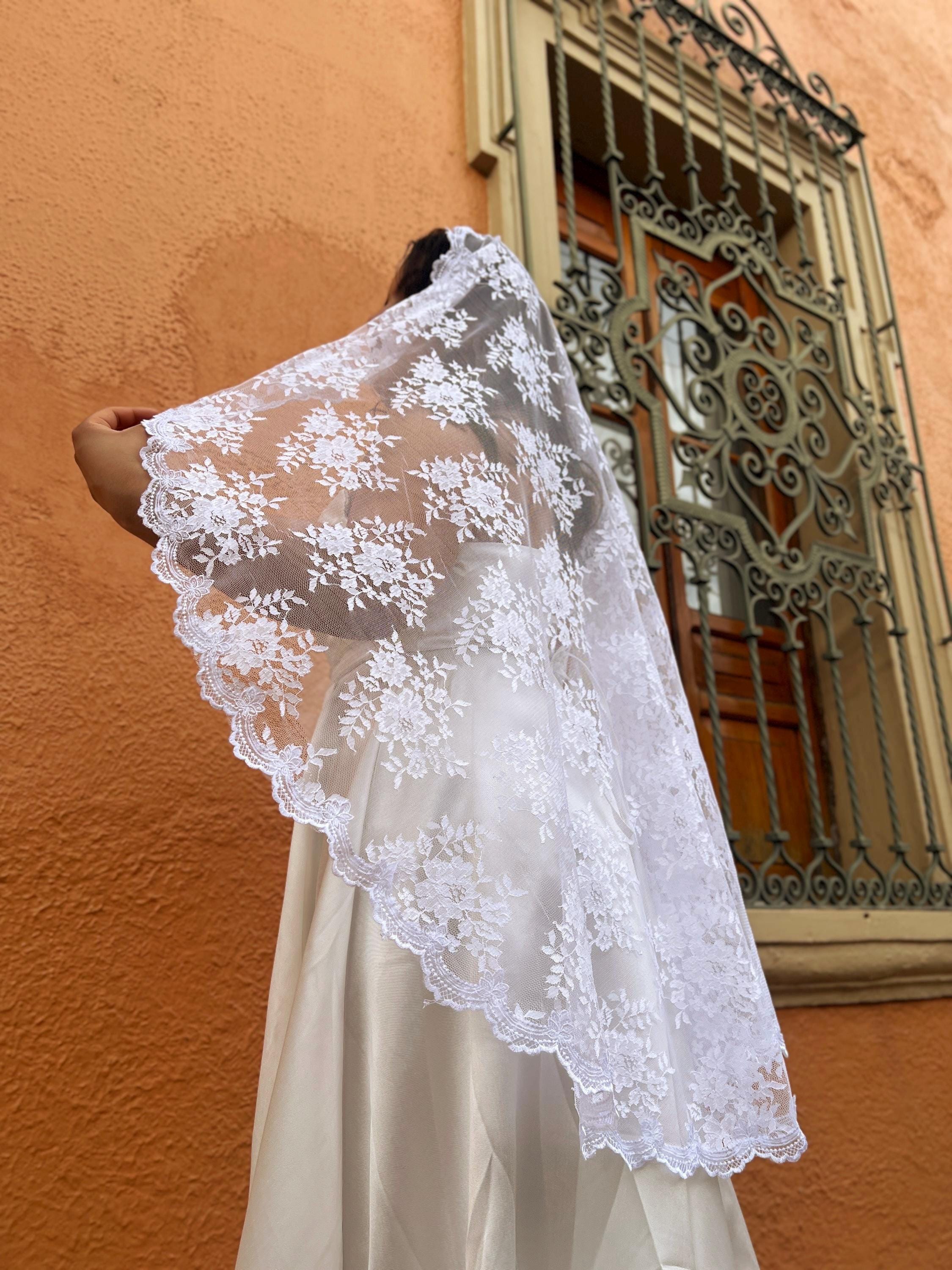
Chantilly lace is known for its whisper-soft drape and intricate floral patterns on a fine net ground. Typically made from silk or silk-blend threads, it offers a lighter and more flowing alternative to bolder styles.
Signature Characteristics
Unlike heavier laces, Chantilly feels airy and romantic with motifs outlined in slightly heavier thread for definition. Its fine netting allows subtle skin visibility, adding sensuality to classic bridal designs.
Ideal Applications
This style is a top choice for bridal veils, overlays, and full skirts inspired by Victorian or Edwardian silhouettes. It adds elegance without overwhelming the wearer, making it perfect for shawls and heirloom christening gowns.
Venetian Lace: Regal Relief and Open Netting
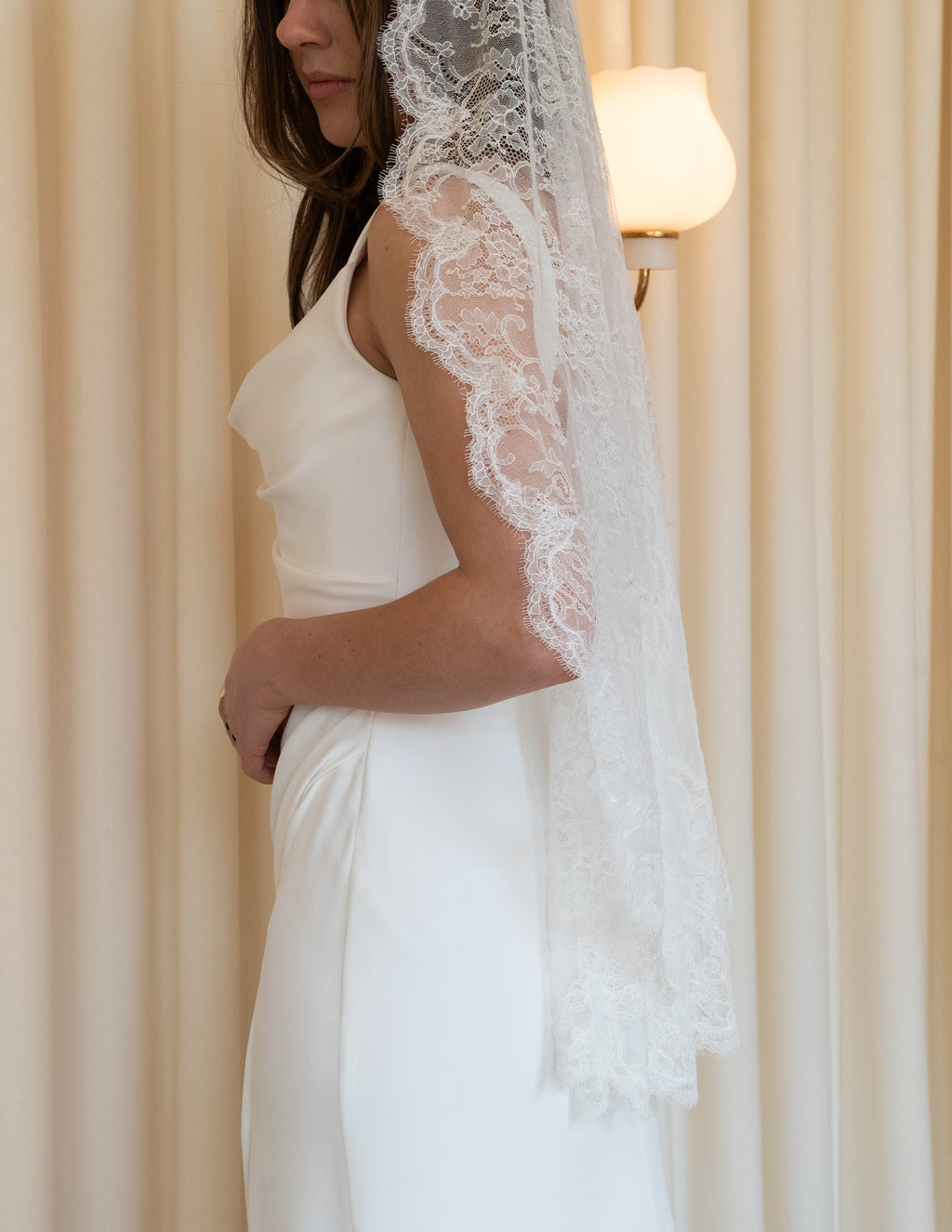
Venetian lace, or Point de Venise, originates from Burano, Italy, and features sculptural raised patterns similar to Alençon. However, it uses an open netting structure instead of a solid mesh background.
Structural Differences Matter
The open ground requires layering over crepe or satin to prevent transparency issues while enhancing the 3D effect. This layering makes the floral and scroll motifs pop dramatically against the opaque underlay.
When to Choose Venetian
Best suited for mantilla veils and formal bridal gowns, this lace conveys regal sophistication historically worn by European nobility. Modern uses include dramatic collars, cuffs, and back details where maximum impact is desired.
Embroidered Lace: Customizable and Whimsical
Embroidered lace is created by stitching decorative designs directly onto a sheer base of tulle or mesh. This technique allows for infinite creativity, including the integration of beads, sequins, or metallic threads.
Design Flexibility Advantage
Unlike traditional lace with fixed patterns, embroidered versions can be fully customized with motifs ranging from floral to abstract. Produced globally, it offers both high-end and accessible options for personalized detailing.
Styling for Personalization
Ideal for brides wanting unique detailing, this lace shines in embellished bodices or statement sleeves. The added textures create visual interest under lighting, and the structure is often easier to repair than woven lace.
Eyelet Lace: Breathable and Beachy

Eyelet lace is made by cutting or burning small holes into fabric and reinforcing them with stitching to form geometric or floral patterns. This process results in a lightweight and highly breathable textile.
Modern Production Methods
Traditionally hand-cut, eyelet lace now often uses laser technology to ensure precision and clean edges on cotton-based materials. This method is frequently referred to as creating laser-cut fabric.
Perfect for Warm Climates
Due to its perforated design, this lace is ideal for summer dresses and beach weddings where airflow is essential. It brings a fresh, youthful, and casual vibe to bridal fashion compared to more formal options.
Crochet Lace: Hand-Crafted Boho Charm
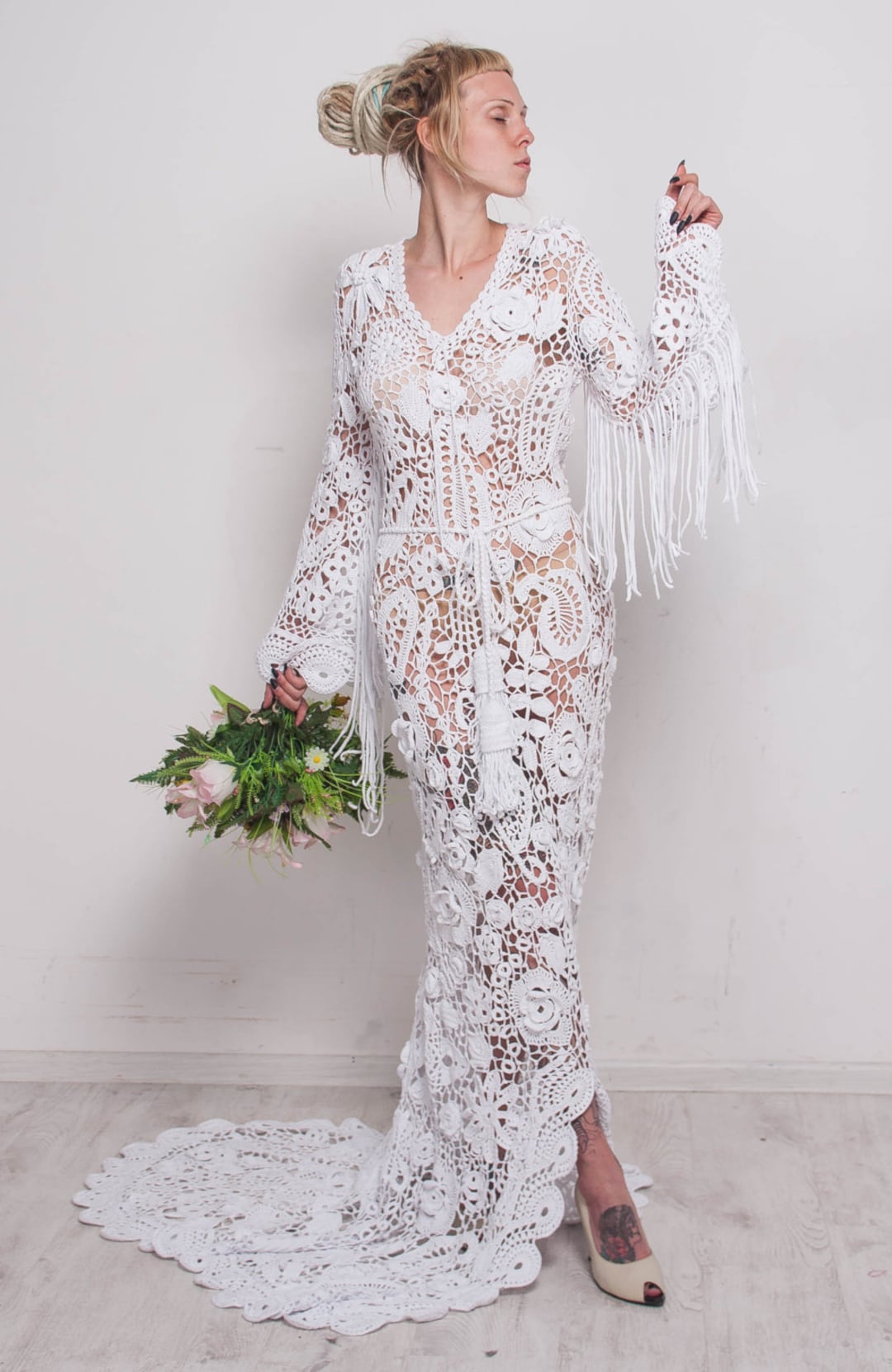
Crochet lace is made entirely by hand using a hook and thread to create airy, open designs with distinct motifs. Each piece is unique, featuring organic patterns that feel freeform and artisanal.
Why No Two Are Alike
Since it is hand-crafted, minor variations occur naturally, adding charm rather than flaws to the final product. This uniqueness makes it highly desirable for bohemian brides seeking authenticity.
Layering and Styling Tips
Because the design is open, it is typically layered over solid fabrics like silk or cotton for modesty and structure. It pairs well with nature-inspired themes for destination weddings and outdoor ceremonies.
Regional and Technical Varieties Overview
Beyond the major styles, numerous regional varieties offer specific textures and historical significance. France produces fine geometric patterns like Valenciennes, while Belgium is famed for the precision of Brussels needle lace.
French Lace Traditions
French regions contribute styles like Argentan, which features denser scrolls than Alençon, and Point de Gaze with delicate floral sprays. Guipure is another French variety where motifs are connected by bars rather than a net background.
Belgian and Flemish Mastery
Belgium offers Binche, which is denser than Chantilly, and Mechlin, a soft lace with a slightly raised outline. Brussels needle lace involves stitching individual flowers separately and joining them with fine threads.
British and Irish Contributions
The UK and Ireland contributed Honiton, a hand-made Devon lace popularized by Queen Victoria, and Irish Crochet with 3D flowers. Nottingham lace represents the historical mass-produced machine-made options from England.
Italian and Global Styles
Italy’s Burano island produces authentic Venetian lace, while other global styles include Maltese lace with star patterns. Nanduti from Paraguay offers spiderweb-like designs, highlighting lace as a universal craft with local identity.
How to Evaluate Lace Quality
High-quality lace should exhibit depth, texture, and structural integrity upon close inspection. You can determine value by examining thread count, pattern clarity, and the material’s ability to hold its shape.
Thread Count and Structural Depth
Superior Leavers-made lace utilizes between 12,000 and 50,000 threads to create richly textured motifs. Visually, you should see significant depth in the patterns rather than a flat, printed appearance.
3D Relief and Pattern Clarity
For raised styles like Alençon, the floral designs should stand distinctly above the background with tactile difference. Check that opaque sections contrast sharply with the sheer net without fuzzy or bleeding lines.
Uniformity vs. Uniqueness
Machine-made lace should show consistent pattern repetition with no misaligned motifs or skipped stitches. Hand-made lace will have slight variations, which are expected and add to the charm rather than indicating a flaw.
Material Strength and Flexibility
Gently pull the fabric to ensure it resists tearing and returns to its original shape without distortion. Cotton-rayon blends with nylon reinforcement generally perform better than pure silk, which can snag easily.
Choosing the Right Lace for Your Needs
Selecting the perfect fabric involves matching the aesthetic to your occasion while considering practical factors like climate and layering requirements. Different types of lace suit different styles and venues.
Matching Aesthetic to Occasion
Vintage looks pair well with Alençon, while classic romance suits Chantilly or Honiton. Bohemian styles benefit from crochet or eyelet, whereas regal formality calls for Venetian or heavy guipure.
Layering and Fabric Pairing
Venetian and crochet laces usually require opaque backing, while Alençon and Chantilly can stand alone on mesh. Pair delicate laces with lightweight linings and heavier guipure over satin or taffeta for support.
Seasonal and Climate Considerations
Choose eyelet or Chantilly for summer weddings due to their breathability and light weight. For winter events, opt for heavier guipure or embroidered lace with long sleeves to provide warmth and drama.
Care and Longevity of Lace Garments
Proper maintenance ensures your lace garment remains beautiful for years, whether it is an heirloom piece or a modern creation. Always check the fiber content before attempting any cleaning method.
Cleaning and Preservation Tips
Cotton and synthetic blends may tolerate gentle hand-washing, but silk and beaded lace require professional cleaning. Never wring or twist the fabric, and lay it flat to dry away from direct sunlight to prevent yellowing.
Repair and Restoration Options
Small snags can sometimes be mended with a fine needle and matching thread, but major repairs need specialists. Many vintage pieces are restored using invisible reweaving techniques to preserve the original structure.
Final Thoughts on Selecting Types of Lace
Understanding the various types of lace empowers you to make thoughtful choices for your wardrobe or special events. From the labor-intensive beauty of Alençon to the breezy appeal of eyelet, each variety offers a unique blend of history, texture, and style.
By evaluating quality markers like thread count and relief, you can ensure your selection stands the test of time. Whether you prioritize the durability of synthetic blends or the artistry of hand-crafted silk, knowing these details helps you find the perfect match for your needs.
Frequently Asked Questions About Types of Lace
What is the most expensive type of lace?
Alençon lace is typically the most expensive due to its extreme labor intensity and traditional French production methods. The hand-finishing process takes significant time, making it a premium choice for couture gowns.
Can lace be washed at home?
Cotton and synthetic blends can often be gently hand-washed, but silk and beaded laces require professional cleaning. Always check the specific fiber content and care instructions before attempting to wash any lace garment.
What is the difference between Alençon and Venetian lace?
Alençon features bold motifs on a sheer mesh background, while Venetian lace uses an open netting structure. Venetian lace often requires layering over opaque fabric, whereas Alençon can sometimes stand alone.
Why is silk lace rare in modern fashion?
Pure silk lace is rare today because of its extreme fragility compared to modern blends. Designers now prefer cotton or rayon mixes reinforced with nylon for better strength and flexibility during wear.
How can I tell if lace is high quality?
High-quality lace shows depth and texture in its motifs with crisp outlines and no blurred edges. You should feel a tactile difference in raised areas, and the fabric should resist tearing when gently pulled.
Which lace is best for a beach wedding?
Eyelet lace is ideal for beach weddings because its perforated design is lightweight and breathable. Crochet lace is also a great option for warm climates due to its open, airy structure.