How to Lace Golf Shoes: Quick Steps
Lacing golf shoes might seem like a simple task, but doing it correctly can make the difference between a solid swing and frustrating foot slippage on the course. Knowing how to lace golf shoes properly goes beyond just tying a knot because it secures your foot for stability, power transfer, and all-day comfort over 18 holes.
An improperly laced shoe can cause blisters, reduce balance, and even alter your swing mechanics significantly. This guide breaks down the best lacing method, explains key fit systems like V-throw and B-throw, and helps you diagnose common fit issues to keep you grounded.
Execute the Standard Over-Under Lacing Method
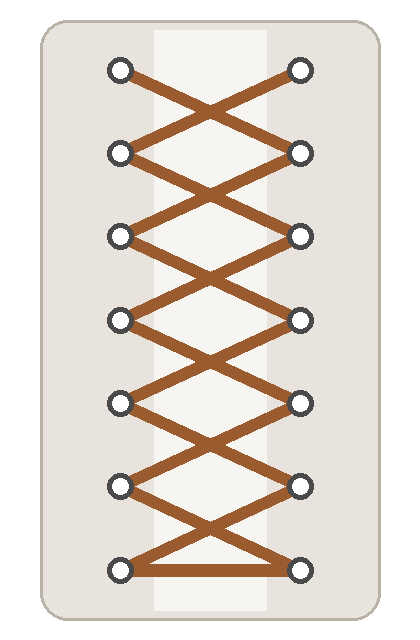
The most effective way to lace golf shoes is the over-under crisscross technique. This method ensures even pressure, a secure fit, and long-lasting knot integrity which is critical during the dynamic motion of a golf swing.
Follow the Step-by-Step Lacing Process
- Start with Proper Placement
Lay your golf shoes flat on a surface. Thread the lace through the bottom eyelets from the inside out so the ends emerge on the outside. Ensure both sides are equal in length for balanced tension. - Create the Crisscross Pattern
Cross the left lace over to the right upper eyelet and pull it through. Repeat on the other side by moving the right lace over to the left eyelet. Continue this diagonal “X” pattern up the shoe. - Maintain Even Tension
Pull each cross snug but not tight as you lace upward. Over-tightening the midfoot restricts circulation and causes discomfort while leaving room for natural toe movement. - Finish with a Secure Golf Knot
Tie a reinforced bow tie by making a loop with one lace. Wrap the other lace back toward you around the base of the loop. Pull the second lace through to form a second loop and tighten both.
Pro Tip: The “wrap back toward you” motion creates a locking effect that resists unraveling from foot movement. This is essential for golfers who shift weight repeatedly during their swing.
Prevent Loose Laces During Play
Even with a good knot, laces can loosen over time. You can use specific solutions to maintain security throughout your round.
- Lace locks: Small plastic clips grip the laces and stay tight.
- No-tie elastic systems: Modern golf shoes sometimes use stretchable internal lacing.
- Knot check: Retie your shoes before each round and after walking between holes.
Distinguish Between V-Throw and B-Throw Lacing Systems

Not all golf shoes lace the same way. The lacing system design determines how the shoe fits your foot shape. Choosing the right system is as important as the lacing technique itself.
Utilize V-Throw for a Snug Fit on Standard Feet
The V-throw system creates a tight, narrow fit that narrows at the bottom and widens slightly at the top. This forms a distinct “V” shape when laced correctly.
- Best for: Standard foot width, average arches, and narrow to medium insteps.
- How to Check Fit: A clean, sharp “V” when fully laced indicates a correct fit.
- Warning Signs: If you cannot tighten the top eyelets, the shoe is too small. If the “V” flattens into a straight line, the shoe is too wide.
Warning: If your “V” disappears due to over-tightening, the shoe is too wide. Do not go up a size. Instead, switch to a B-throw or try a narrower model.
Select B-Throw for High Arches and Wide Feet
The B-throw system offers more volume across the instep and forefoot with a slight inward taper. This shapes more like a “U” and accommodates different foot volumes.
- Best for: High insteps, wide forefeets, or golfers who feel pinched in V-throw shoes.
- Key Benefits: Provides more room without sacrificing stability and allows tighter lacing without pressure points.
- Performance Gain: Delivers better power transfer for high-volume feet by eliminating gaps.
Expert Note: B-throw does not mean “bigger.” It means better volume distribution. Many golfers with high arches gain stability by switching systems rather than sizes.
Diagnose Common Lacing and Fit Problems
Even with perfect lacing, fit issues can sabotage your game. Use this quick diagnostic guide to spot and fix problems immediately.
Laces Won’t Tighten Fully
Cause: High arches, wide forefoot, or a shoe that is too small.
Fix: Try a B-throw shoe or go up half a size if length is also tight. Never force laces as this distorts the upper and reduces support.
“V” Shape Collapses When Laced
Cause: Foot volume exceeds shoe capacity.
Fix: Upgrade to a B-throw model. This is not a lacing issue but a fit mismatch requiring a different shoe design.
“V” Flattens Into a Straight Line
Cause: Shoe is too wide or too large for your foot.
Fix: Downsize or switch to a narrower last. Over-tightening will not fix the resulting instability.
Blisters or Hot Spots on the Top of the Foot
Cause: Over-tightening midfoot or uneven lacing tension.
Fix: Loosen the middle eyelets slightly. Use a ladder lock or skip lacing to relieve pressure points.
Premature Toe Box Creasing
Cause: Shoes too big or wrong shape causing foot slide.
Fix: Ensure proper lacing tension and correct shoe size. Creasing weakens material and shortens shoe life.
Laces Come Untied Frequently
Cause: Incorrect knot direction or weak laces.
Fix: Use the “wrap back toward you” knot method and double-tie. Replace worn laces with durable, non-slip versions.
Choose the Right Laces and Maintain Them
The laces themselves matter significantly. Poor-quality laces stretch, fray, or slip which undermines even the best technique.
What to Look for in Golf Shoe Laces
- Material: Polyester or nylon blends offer durability and low stretch.
- Texture: A slightly grippy surface ensures better knot hold.
- Length: Match your shoe’s eyelet count to avoid tripping hazards.
- Width: Standard width fits most eyelets without causing friction.
Upgrade Tip: Replace factory laces with performance-grade ones every 6 to 12 months or when fraying appears.
Maintenance Best Practices
- Re-lace after every round: Prevents material memory and keeps tension even.
- Inspect eyelets and lace ends: Look for fraying especially where laces exit eyelets.
- Clean laces regularly: Hand wash to remove dirt and sweat that degrade fibers.
- Store shoes unlaced: Reduces stress on eyelets and the upper material.
Optimize Fit with Advanced Lacing Tricks
For golfers with specific needs, standard crisscross is not always enough. Try these targeted techniques to solve unique fit challenges.
Ladder Lock for High Instep Relief
Skip certain eyelets to reduce pressure on the top of the foot effectively.
- Lace normally up to the third eyelet.
- Run each lace straight up to the fifth eyelet instead of crossing.
- Cross diagonally to the opposite sixth eyelet.
- Continue lacing normally to the top.
This creates a “ladder” that bypasses pressure points while maintaining ankle lock.
Heel Lock Lacing to Prevent Slip
Prevent heel slip in slightly loose shoes using this runner’s loop method.
- At the top eyelets, thread each lace straight up instead of across.
- Feed each end back down through the loop it just created.
- Pull tight to form a locking loop around the ankle.
- Tie your regular knot to secure.
Use sparingly: Only use for minor heel slippage. A consistently slipping heel means the shoe is too big.
Wide Forefoot Skip Lacing
Reduces pinching across the ball of the foot for wider feet.
- Lace normally from the bottom of the shoe.
- Skip one set of eyelets when reaching the tightest area.
- Cross diagonally from the third to the fifth eyelet.
- Continue upward to finish lacing.
This opens up space without sacrificing necessary ankle support.
Get Professionally Fitted for Your Foot Shape
Even with perfect lacing, the wrong shoe will not work. Two shoes with the same size label can fit completely differently due to lacing systems and lasts.
Why Get Professionally Fitted?
- Match foot shape to lacing system: High instep likely requires a B-throw system.
- Test lacing under movement: A fitter observes how your foot behaves when you simulate a swing.
- Avoid costly mistakes: Premium golf shoes are an investment. Do not waste money on the wrong fit.
Pro Tip: Visit a golf specialty store with fitting experts. Try both V-throw and B-throw models side by side.
What to Bring to a Fitting
- Your golf socks with the same thickness you play in.
- Any orthotics or insoles you use regularly.
- A record of past fit issues like blisters on the left instep.
Final Performance Impact of Proper Lacing
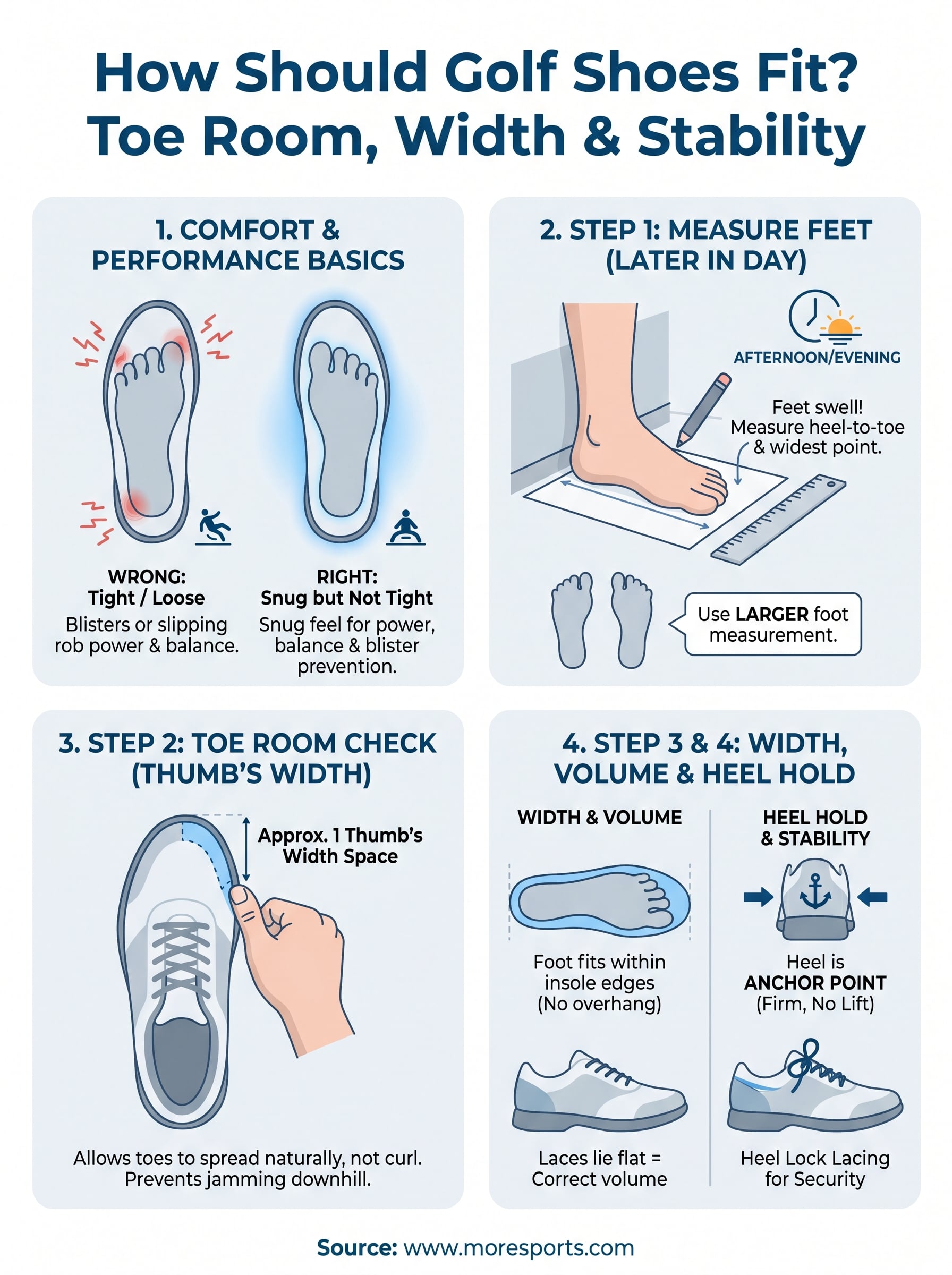
The way you lace your golf shoes directly affects how you play on the course. Here is how proper technique changes your game.
Better Ground Connection
A securely laced foot maximizes contact with the sole. This improves traction and force transfer during rotation which means more power and consistency in every swing.
Stable Swing Mechanics
Foot movement inside the shoe forces your body to compensate. Proper lacing stabilizes your base and promotes a repeatable swing without knee wobble or hip shift.
Reduced Fatigue and Blisters
Even tension prevents hot spots and circulation issues. Your feet stay comfortable from hole 1 to 18 when you know how to lace golf shoes correctly.
Extended Shoe Life
Correct lacing reduces creasing, lace wear, and upper distortion. This keeps your shoes looking and performing like new for much longer.
Frequently Asked Questions About Golf Shoe Lacing
What is the best knot to prevent golf laces from coming undone?
The best method is a reinforced bow tie where you wrap the lace back toward you. Finish with a double knot or an Ian’s secure knot to ensure it stays tight during your swing.
How do I know if I need a V-throw or B-throw shoe?
If your laced shoes form a clean “V” shape, you need V-throw. If the “V” collapses or feels tight on the instep, you likely need the extra volume of a B-throw system.
How often should I replace my golf shoe laces?
You should replace laces every 6 to 12 months or immediately when fraying appears. Worn laces lose tensile strength and can fail mid-round.
Can lacing techniques fix a shoe that is too big?
No. While heel locks help with minor slip, a shoe that is consistently too large will compromise balance. You should downsize or choose a narrower last.
Why do my golf shoes crease at the toe box prematurely?
Premature creasing usually means the shoe is too big or the wrong shape. This causes your foot to slide forward. Ensure proper lacing tension and correct sizing.
Should I lace my golf shoes tightly or loosely?
Lace them snugly but not tight enough to restrict circulation. The goal is even tension that locks the foot in place without creating pressure points or hot spots.
Key Takeaways for Mastering How to Lace Golf Shoes
Mastering how to lace golf shoes transforms your stability and comfort on the course. Use the over-under crisscross method for even tension and tie a “wrap back toward you” knot to prevent loosening.
Choose V-throw for standard feet and B-throw for high insteps or wide forefeets. Diagnose fit issues by observing the shape of your laced “V” and replace worn laces regularly.
Take five minutes before your next round to re-lace with intention. Your swing and your feet will thank you for building a solid foundation.